Wednesday, March 10, 2021

Asuperu Kanojo: a inside to mental disorders


The cover of volume 1

   Asuperu Kanojo, or Asperger’s Girl, is a Japanese graphic novel written by Hagimoto Souha and drawn by Morita Renji. The book follows the main character Yokoi Taku, who recently moved to Tokyo and now makes a living by delivering newspapers and drawing comics. Because of Yakoi’s unusual plot and unhappy endings due to him most likely having ASD (never explicitly stated in the story, but heavily implied), his comics are completely ignored by everyone. However one day, a girl named Saitou Megumi suddenly appears in front of his apartment saying she’s a huge fan of his original works, it turns out she suffers from Asperger’s Syndrome and was abused and bullied when she was a child. After realizing Saitou came from extremely far away and has no intentions, or money to go back, Yakoi decides to let her live with him and thus beginning their journey of learning to rely on each other and treating their mental disorders. I know this is an extremely confusing and complicated introduction so please just read the actual manga. Currently the manga is finished with 12 volumes and 123 chapters in Japanese and Chinese, however the English translation is only up to chapter 41.

    Asperger’s Syndrome, also called AD, is a developmental disorder that affects the ability to socialize and communicate, it is quite rare but can last for years or even be lifelong. It used to be considered as a separate condition, but today it is part of the autism spectrum disorder (ASD), though lots of people still use the term Asperger’s. Asperger’s is called a “high-functioning” type of ASD, meaning it is less severe than other kinds of autism spectrum disorder.

no context panel


I came from China, and generally, it and other Asian countries place less importance on mental disorders compared to the west, to the point where I didn’t know anything about it until I arrived in the US. Thus, my knowledge of mental health as a whole is…not a lot and extremely basic, so I'm not sure how correct the story depicts it, but the reviews from others say it's pretty accurate. This story taught me a lot about mental health, like with Yokoi I learned about how he thinks and even though his childhood wasn’t bad, he still feels empty inside. Then Saitou’s sudden panic attacks, quick changes in emotions and behaviors toward strangers and herself. She is also most likely suffering from multiple disorders, including PTSD and depression from her abusive father and school bullies. I’ve learned a lot of these things from places like health class, but it was simply just facts and words that I memorized. In this book, you get to follow 2 characters and watch them grow and experience things from their perspective, allowing you to understand things much more than just studying. Overall, I think Asuperu Kanojo is a really good read, though there are a few… interesting and maybe questionable side plots, the mental health is definitely the main draw of this manga and I definitely recommend reading it.

The cover of volume 5


Monday, February 22, 2021

Talking To Strangers by Malcolm Gladwell

    I bought my brother Talking to Strangers by Malcolm Gladwell around a year ago. It didn't take him long to finish, and when he gave the book to me to read, it was covered in sticky notes. He had gone through and marked all the interesting points in the book, and there were a lot. I recently got to reading it and was constantly amazed with every word. Malcolm Gladwell changed my perception of myself and everyone around me. 

    The structure of Talking to Strangers is much different from any book that I have read before. Malcolm Gladwell discusses a few main topics or behaviors regarding interactions with peers throughout the book. For each topic he will describe popular events where  and picks apart each action made by the characters in the event. It was incredible to see him take these events and inspect them in ways that I've never considered. He often pointed out the flaws in the people's perceptions of strangers and it surprised me. There are so many situations that seem would have been a lot simpler had assumptions and viewpoints been different. Malcolm Gladwell also introduced some studies where the behavior was observed in a more controlled environment and once or twice invites you to participate too. 

    I loved reading Talking to Strangers because Malcolm Gladwell discusses social science in easy terms. Throughout the whole book I was able to keep up, though I did have to go back and look up names of people and places a few times. What is also great about his book was it was entertaining to read. He paces the book out so new insight and studies are frequently introduced and you are never stuck reading the same thing in different wording (like I find mind and mental health books tend to do). I would recommended reading this book, I had lots of fun reading it and hope you will too. 

Thanks for reading!
 - Sophie A. 


Wednesday, February 3, 2021

12 Rules for Life Reviewed by Zhaoxin Sun


I have recently gotten into watching self-help Youtube videos and books, and trying to pick up good habits that way; this month, I read 12 Rules for Life by Jordan Peterson, a clinical psychologist and professor of psychology. This book was intriguing in the beginning because I couldn’t help but notice how precise his writing style was. He talks about the importance of being “precise in your speech” in Rule 10, which was obvious to me when he took a silly example of birds and said “chickens, like suburbanites, live communally. Songbirds, such as wrens, do not, but they still inhabit a dominance hierarchy” (Peterson 3). The writing in this line is far from the deepest and most specific language he used in the book, but I was surprised and impressed to see how concisely he related songbirds to a fundamental idea in his chapter (dominance hierarchies and territory).


My interest was piqued at this point, but I started to take him more seriously after he wrote,“There will always be people better than you--that’s a cliche of nihilism, like the phrase, In a million years, who’s going to know the difference? The proper response to that statement is not, Well, then, everything is meaningless. It’s Any idiot can choose a frame of time within which nothing matters. Talking yourself into irrelevance in not a profound critique of Being. It’s a cheap trick of the rational mind” (Peterson 87). I have always been doubtful of the moral validity of sentiments expressed on Instagram, the almost melodramatic expressions of people crying about their woes, complaining about the difficulty of existence and their thoughts of giving up, of the futility of their existence. Their feelings of defeat may well be true for them, but it certainly is not an example of how to live, nor a mindset to commend and pass on to future generations. I felt immense respect for the author when he perfectly summarized the cowardice of such a mindset; I could relate to his writing very deeply because he managed to describe perfectly what I was struggling to flesh out myself. At this point, I got the impression that he was a highly intelligent person that I should really pay attention to.


He has rules including “don’t let your children do anything that makes you dislike them” and “stand up straight with your shoulders back.” I think these are excellent rules because he backed them up with extremely compelling examples. For example, his justification for the rule about children was that if children are not taught the basic social rules that make them pleasant to be around, they will be continually rejected by peers and adults who could help them. Again, this struck home with me because I always feel that my mother completely spoils my younger brother to the point where I find him almost unbearable to be around. If he is impossibly frustrating and an absolute nuisance to even me, his older sister, how would he be received by everyone around him that isn’t his family? It was quite an eye-opening point.


I personally agreed with and related to a lot of what he said, but I think that this book could be worth exploring even if that is not the case. When he talks about his first rule of standing up straight, he explains its importance as a physical adjustment of posture to reflect mental preparation to be combative and present in life. Even if that is not your life philosophy, what I found most interesting about this chapter was his example of lobsters. He uses the dominance hierarchies of lobsters to prove that they exist naturally (and are therefore not just a man-made oppressive structure), weaving a fascinating narrative with them. I am sure some people will disagree with what he says, but I think his logic and examples read much like a story. Even if you disagree with his conclusions and don’t relate to his examples, it’s still interesting to follow his reasoning.

All in all, I would absolutely recommend this book. It was pretty boring in the beginning and I fell asleep several times, but his precision of language, apparent intelligence, compelling examples, and general mental narrative made it a worthwhile read for me. His ideas and the reasoning behind them are obviously not for everyone, but I still think it’s an overall good book.


Wednesday, January 27, 2021

Manga vs Manhua vs Manhwa Pt 1: the history and art

    Graphic novels, a genre that every kid, including me, loves. It can also be divided into many different sub-categories, comics, non-fiction, 4-koma, and many others depending on how produced, and since I am Chinese and lived there, obviously the graphic novels I read growing up were all from East Asia, which can be dissected into three sub-genres: Manga (漫画/マンガ), Manhua (漫画), and Manhwa (만화). Currently, these are also the most popular genres of graphic novels as western comics sales are steadily declining. So, today I am going to define their names, explain some history, and help you differentiate their art styles. 

    All three names come from the same root of the Chinese word "漫畫", "漫" meaning whimsical and "畫" meaning pictures or drawings.  The first of the three, manga, is claimed to have originated in the 12th century with scroll art. However it only became popular in the 18th century around the time of WWI, and during WWII where most of China and all of Korea became Japan's territory, after WWII when both countries were freed they were all influenced by Japanese manga which eventually evolved into modern Manhua and Manhwa (both were used before this, but only become mainstream after). 

    As manga is the oldest and by far the most popular, the amount of artist that draws this genre is also far greater than manhua and manhwa. This's means that the difference in art style is also significant. From what I have seen, the art style dependents a lot on the age demographic it is meant for, in Japan there are four age-related genres: Shoujo (girl), Shounen(boy), Josei(women), and Seinen(men). Shoujo and Shounen tend to have a lighthearted and more cartoony in contrast to Josei and Seinen's more realistic and serious art style. There's also a lot of grey areas in between all four so many long-lasting mangas' art style will evolve over time becoming more serious or just better in quality. Some mangas that the reader can experience some major art evolution includes the best selling manga of all time: One Piece, Jojo's Bizarre Adventure, and one of my favorite manga: Attack on Titan. 
Attack on Titan is nowhere near one of the longest-running manga of all time. However as you can see, even just in the span of 8 years the art style significantly changed into a slightly more realistic and definitely more detailed and clean style.

       Manhua and Manhwa, just like their pronounciations, are quite similar. Though they are just referring to any kind of graphic novels in their native definition, the western definition mainly referrs to the digital, long strip type of comics. commonly just called webtoon. Most of these comic are fully colored instead of just black and white like mangas, this also means the line art of the webtoons could be less detailed and much thinner. The artsyle of most webtoons are quite similar, with a slightly more proportional body and face compared to most cartoonish mangas. Manhua and Manhwa are very different to manga, to the point where I disliked them for a few years, however recently I've been enjoying them more.  
    
This is Solo Leveling, a korean webtoon I'm currently reading. Each scene is incredibly detail, however if you cut out the shading, the lineart becomes much simpler compared to manga. 

      There are many other differences between Manga, Manhua, and Manhwa like publications, plots, genres, reading platforms, animations, artists, and many more. However I'll save those for next time, thanks for reading and I hope you learned something new about Asian comics.

- Yan L

Friday, January 15, 2021

Tearjerkers

        I recently read Where the Red Fern Grows by Wilson Rawls and had the hardest time getting through the ending. I had to stop ten pages from the ending to cool off, before I could finish up the book. It got me thinking about other books I have teared up over, so I decided to make a list of a few of the saddest books I've read. 

1. Where the Red Fern Grows by Wilson Rawls

    Where the Red Fern Grows is the saddest book I have ever read. The story follows a the journey of a young boy, Billy, living in the Ozarks with his hound dogs. At the beginning, Billy is determined to get his own hunting dogs but his family can't afford to buy any hound dogs for him. So, for two years Billy works every day in summer to save money, and one day buys two hound dogs, Old Dan and Little Ann. From here the story goes on to tell the adventures the trio has together, until one fateful day. 

This next part will include spoilers! Highlight to read it.


    In a encounter with a Mountain lion during one of their hunting trips, Old Dan received a terrible blow that he was unable to recover from. Billy and Little Ann are heartbroken, and both struggle to move on after experiencing a terrible loss. Only a few days after Old Dan died Little Ann also died, from the heartache of losing a close companion.  The ending of the story does a beautiful job of showing the pain from losing a close friend.

Through this story you were able to experience this beautiful and strong relationship that Billy and his dogs had created. You are invested in their friendship and the struggle that it took to get there, which makes the ending so much harder to handle. This is a wonderful read and would recommended it whenever your in the mood for a heartwarming story.

2. The Book Thief by Markus Zusak 

    Since this is a World War 2 book it deals with a lot of sensitive subjects. The book is narrated by Death and follows the a young girl living in a small town in Germany. This book is very similar to Where the Red Fern Grows, with many close and endearing relationships with unsatisfying endings. Just a head up, it was slow in the beginning, but it quickly picks up through the middle and end. Otherwise, it's a great read with a unique writing style and would definitely recommend it.

3. The Giving Tree by Shel Silverstein

    The giving tree is a classic picture book by one of my favorite authors Shel Silverstein. It tells the story of a man and a tree, in the beginning the tree is giving everything to the man until the tree is just a stump. That's plenty though, for now the man is very old and just wants to sit. This story doesn't make you cry as much, but it makes you think. The relationship between the tree and the man, shows how the two can be happy in this uneven relationship. It's also a bit sad though, because the tree gave itself up for this man and the tree can no longer be the mighty thing it used to be. Though in the end the tree ended up being the exact thing the man wanted. 


Thanks for reading!  
- Sophie


Thursday, November 12, 2020

The Little Stranger Reviewed by Zhaoxin Sun

The Little Stranger is a gothic novel by Sarah Waters. The story is set in the collapsing mansion of the Ayres family. The book starts off harmless enough but develops into a ghost story (the s p o o k).

Honestly, I was not that impressed by the plot. There was very little tension and suspense compared to books like Harry Potter, and while the plot twists weren’t quite predictable, they weren’t earth-shattering either. I felt throughout reading that I could put the book down and go eat a snack. The transition from normalcy to madness was well executed because the dread gradually creeps and ramps up, but some parts felt slow and a little tedious. Granted, this may be because of my state of mind while reading. Because I read this while my brain was still addicted to the dopamine rushes from Youtube and other fast-paced apps, my criticism of the pace may be because of my brain in overdrive. I am currently re-reading to verify.

While the book was underwhelming in plot, the language was very fascinating to me. Although I’m sure many other old books adopt the same tone, reading a style of writing I never saw before was still surprising. The narrator was extremely sensitive to verbal and nonverbal cues in a descriptive and thoughtful way. His speech shifted around from self-deprecating to reflective; it was almost like the narrator was thinking his thoughts and mocking them at the same time. The author’s way of writing his speech gave me a good idea on his character and how his mind worked, and described the setting in a vivid yet natural way.

Without giving anything away, here are a few lines from the book:

“… The weathered sandstone edging. They made it look blurred and slightly uncertain—like an ice, I thought, just beginning to melt in the sun” (Waters 1).

“The experience can leave one drained, but also oddly wakeful and edgy, and now my mind, with nothing to anchor it, began to run over the details of the past few hours like a film on a loop” (Waters 483).

         When the narrator described the sandstone, I immediately got a hazy and mysterious “vibe” instead of the typical grand academic atmosphere most books describe with sandstone. In the second quote, instead of saying something like “I was so tired, but still clear minded for some reason. I drifted off to sleep still thinking about what just happened,” Waters writes that the doctor felt “oddly wakeful” and that his mind was unanchored. The author avoided cheesiness and cliché, and added an introspective film over the narrator’s observations.

         If you’re just looking for a quick spook, I think you’d have a better shot with something by Poe. That said, I would highly recommend The Little Stranger for a model of musing and contemplative writing. It might be interesting to observe how the author indirectly describes things for a more natural and thought-provoking tone. 


Monday, November 9, 2020

Wyrd Sisters by Terry Pratchett


My friend has recommended the books by Terry Pratchett to me many times in the past few years, and for some reason I never got to reading them. A few weeks ago, I was just looking for a new book when she suggested I read Wyrd Sisters by Terry Pratchett. I decided to read it, and I am glad I did.

Wyrd Sisters is set in Discworld, a magical world on the backs of four giant elephants standing on a turtle. The main characters of the book are three witches named Granny Weatherwax, Nanny Ogg, and Magrat Garlick that form a coven together. The plot starts when the king dies and his baby son is left with the three witches. They give the baby away and plan to continue their normal lives. However, neither the witches nor the kingdom itself like the new king, and the witches decide to break their rule of not meddling.

I really liked the characters in the book. There are many different characters, and the book gives the perspective of each of them. I thought the characters were stereotypical in some ways but there was at least one attribute that each character had that did not fit the stereotype. I really liked this because I thought that the ways in which the characters were stereotypical made the story seem like a classic fairy tale while the ways in which they were not kept the story unique and interesting. One example of how the characters were both stereotypical and not stereotypical was the witch Nanny Ogg. When you think of a witch, you might imagine an old woman in a pointed hat bent over a cauldron with a cat at her feet. Like the witch you might imagine, Nanny Ogg wears a pointed hat and owns a cauldron and a cat and a broomstick. However Nanny Ogg also lives in a regular looking house and she has many children that often visit her, which might not be characteristics of witches that typically come to mind. Another example of such a character is the duke’s fool. The fool looks, dresses, and behaves like a stereotypical castle fool, from the bells on his clothes to the way he speaks, yet he is not as happy as he might seem and longs to do something other than be a fool for the rest of his life.

In addition to the interesting way each character behaved, there were also many different types of characters. While the focus of the book was on the three witches Nanny Ogg, Granny Weatherwax, and Magrat Garlick, many other characters are introduced and narrate the book for a short section. As a result, I knew what each person was thinking which gave me a better understanding of the plot. It also helped me get a sense of the land the book is set in. It was a magical land that I knew nothing about before reading the book, so getting a sense of what type of people lived there and how they acted made the land come to life in my imagination. There was a wide variety of characters in the book, from the dwarf Hwel that writes plays to the dead former king to a storm that longs to impress the world. Each character is related to the main plot in different ways and amounts. Some of the characters just add little details to the plot but I still thought they offered a new entertaining point of view. Even though the storm was only mentioned on a few pages, it was one of my favorite characters. 

Another detail I really liked about the book was the use of asterisks. The book had many asterisks with extra details explaining background about the world to clarify points that were mentioned. I really liked this because I thought it was an interesting way to add information without disrupting the plot of the story too much.

Overall I really liked the characters in the book and the style of the book and I would recommend Wyrd Sisters.


Thursday, October 22, 2020

The Perfect Way to Read a Book

     I'm sure you've heard people talk about "good lighting" and "you'll strain your eyes reading in the dark".  Focusing on reading for an extended amount of time or with bad lighting can cause eye strain. Some symptoms of eye strain include blurry vision, headaches, irritated eyes and pain in your neck, shoulder and back. Another problem from reading extended amounts of time is straining your neck and shoulder from reading in the same position for an extended amount of time 

How do you prevent it?

  1. Lighting

     Don't worry reading in dim lighting will not damage your eyes, but it can have short term effects like eye strain. When you read in a dim light your eyes tend not to blink as much which can dry them out and cause. Also reading in dim lighting can give your eyes mixed signals; relax to collect light, but contract to focus on the words. Also, in dim lighting your eyes must work harder to distinguish the words from the page. (if you want a more in-depth answer then what I have given you I recommend looking at this site https://health.howstuffworks.com/human-body/systems/eye/reading-in-dim-light.htm) 

    When you are reading you want your light source to come from behind you, and you want it to be a bright, direct light. Try to minimize glaring from outside light sources and any shadows casting onto your page (for right-handed people place the light on your left-hand side, so there's no shadow from you turning hand page, left-handed people do the opposite). As for type of lighting, experts say that halogen and florescent lighting does a great job illuminating writing material. 


     2. Positioning 

    For the positioning of a book, you want it to be around arm's length away or to be more precise 14 to 18 inches away. Also, you want your text to either be at eye level, or slightly below. 

    For positing yourself want to sit in a chair where your upper legs are parallel to the ground, and your lower thighs are perpendicular to the ground. If the chair is higher than this try resting your feet on a raised platform. Try avoided straining your neck by avoiding reading with the book in you lap or laying on your side. Using a book holder can help prevent neck straining. Lastly for back pains sit up straight, by reading at eye level you can help promote a straight back. Also try placing a small pillow at your lower back to help support the curve in your back (lumbar curve).


     3.  20-20-20

    Lastly remember to take breaks! This could be a short stretch break or 20-20-20. In 20-20-20 you want look away every 20 minutes at something at least 20 feet away for a minimum of 20 seconds. Doing this will help you prevent eye straining from looking at something for an extended period. 


Thank you for reading my blog post, and if you are interested in learning more about how to read a book check out these sources!


   -  Sophie A.


https://www.lampsplus.com/ideas-and-advice/lighting-for-readers/   

https://www.helpmyreading.com/Site/Proper_Reading_Posture.html

https://www.healthline.com/health/eye-health/eye-strain 


Thursday, October 15, 2020

Reading Experience of Webtoon by Zhaoxin Sun


I’m sure we’ve all read the reviews on the back of books. A few sentences long, they offer praise for the author’s mastery and a promise of the book’s brilliance. However, we rarely see people discussing their thoughts on a particular book in our day-to-day life. There are almost no group interactions about the same reading outside of a reading group or class; people don’t generally share every step of their reading process because everyone reads at a different pace and it seems unnatural to stop and discuss something. Where can we find informal opinions and real-time dialogue between readers about reading? The comment sections of online storytelling forms. There are many sites that serve as platforms for online storytelling, such as Tapas, Webtoon, Wattpad and WebComics. I personally interact the most with Webtoon so I will focus on it for my analysis. 

Allow me to explain the system on Webtoon: Webtoon is a webcomic publishing portal with many comics in a wide range of genres. They have a “Featured” collection of comics that are Webtoon-supported. These comics are much better drawn and told than the rest. All Featured Webtoons are updated weekly, and there are options to like and comment on the chapter, as well as like or dislike comments. After a while, the three most liked comments become Top Comments. I have noticed certain patterns in the contents of the comments that make it to Top Comment, so I tallied the ones that fell into each category. 

I categorized the three Top Comments on the most recent chapters of the Featured Webtoons I read and here’s what I found:

  • 9 on character development

  • 1 on cliffhangers

  • 20 jokes

  • 84 reactions

  • 32 observations/theories

  • 1 about other functions of webtoon like liking the chapter

  • 8 on author appreciation

  • 9 #relatable-type comments

  • 15 direct message to a character

When a professional book reviewer is writing, they are writing because it is their job. In Webtoon comment sections, we do see many of the same topics that professional book reviewers talk about come up, such as comments on character development, reactions, and other observations, but they are not written with the same mindset. With Webtoon comments, we see a great motley of reactions that are unacceptable in a traditional book review setting. Some are personal testimonials on ways a chapter touched them, others lists of affirmations from strangers that are completely unrelated to a chapter, emergency hotlines when a chapter touches on sensitive topics, confusion on plot holes, and speculation and theories. Comment threads have a much more personal and engaged presence. Instead of serving as an advertisement for the book, which is what book reviews often do, these informal comment sections delve into whatever commenters can offer. While some are similar to book reviews, like comments on character growth or commendations for an author, Webtoon comments allow for the spontaneity and randomness that are able to stir someone’s emotions in a way that formulaic reviews do not.

Books are a unique and personal experience that may inspire epiphany, relatability, joy, and many other emotions in a reader. However, this experience is mostly kept private. Other media have platforms to interact with a community through a shared adventure of reading and discussion. If you have the time, I encourage you to follow some online storytelling; it is an interesting and interactive form of entertainment.


Saturday, October 10, 2020

The Kingdom of Back by Marie Lu


The first time I heard of Nannerl Mozart was when I read a picture book about her brother, Wolfgang Amadeus Mozart. Now, years later, I got the chance to read another book about Nannerl, The Kingdom of Back by Marie Lu. The Kingdom of Back tells the story of Nannerl, a child prodigy who is incredibly talented at playing the clavier. Yet despite her talent, Nannerl fears being forgotten, especially while her even more talented younger brother, Woferl will not be. She gets a chance to change her future when at the beginning of the story, Nannerl has a dream of a magical kingdom called The Kingdom of Back. It becomes a fairytale story she tells Woferl, and then it becomes more than just a story when the two of them start having experiences entering the kingdom and spending time there. Nannerl learns that she must save the kingdom and starts discovering secrets about its present and past. The secrets could help her be remembered, but becoming famous could damage her closeness with Woferl so she has to carefully choose what is best for the kingdom and her family.

I thought Nannerl’s passion for music was interesting. In many places, especially the Kingdom of Back, she could hear music, and it influenced her impression of people and places. When the music was off key, she sensed something was wrong and when it was light and airy, she felt happy. She brought music into her everyday life. When she composed, she tried to bring these feelings into her music and I liked reading about it. I also admired her concentration and hard work when she practiced. She imagined other worlds as she played so that she could really express the music the way she wanted to. I thought her hard work was inspiring because she not only wished to be known for her music, she also worked very hard for it, even when it did not seem to be going her way.

Another thing I really liked about the book was how it was both a historical fiction book and a fantasy book. I love both those genres and I think that finding a book with a combination of the two is rare. Both Nannerl’s worlds were vivid and fascinating and easily came alive in my head. It is not hard for me to picture the Kingdom of Back with its twin moons shining over the enchanted forest of upside down trees and the author also made it easy to understand the world of 18th century Europe with its kings, queens, palaces, and opera houses. One way the author made it easier for me to understand the time Nannerl was growing up was by having characters mention other historical events such as the French and Indian war. It felt natural when the characters talked about what was going on in the world and it helped me understand more about Nannerl’s world by comparing the time to something I knew a little more about. The mix of both the worlds made the book more interesting to me, because just when I got a little bit tired of one world, the book switched to the other world which captivated me again.

I would definitely recommend this book, especially if you like historical fiction, fantasy, or both.

-Maya


Saturday, October 3, 2020

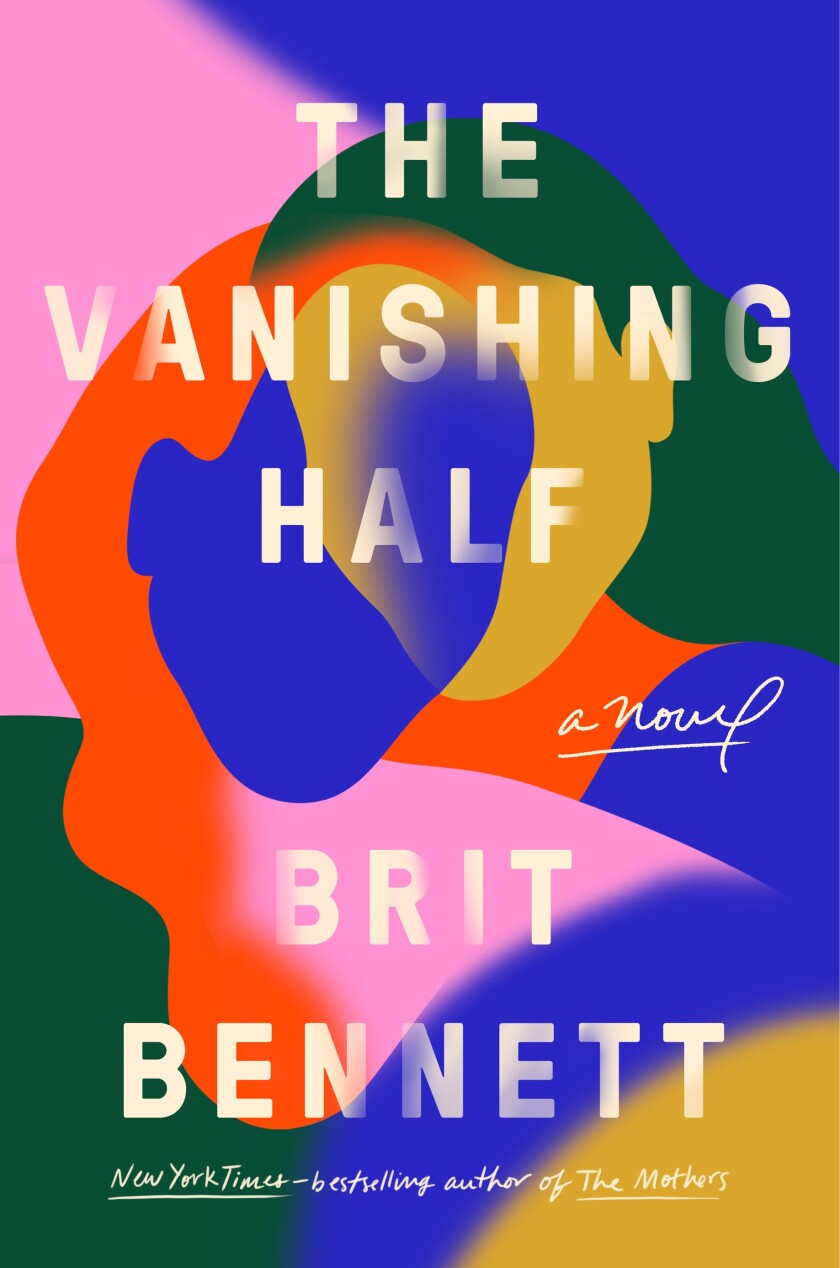
The Vanishing Half by Britt Bennet

    This week in the Anderson book club we read The Vanishing Half by Britt Bennet, a book that follows a family's struggles with race, class and lies. This book is jammed pack with discussion topics which made it a perfect book club read, though it is also great to just read by yourself.  

     The book starts off in the late 1960s, with a set of light skinned black twins living in a small southern town named Mallard (so small it's not on a map). At the age of sixteen they run away, from the small oppressing town they lived in, to arrive at New Orleans. From here they part ways (Stella runs away) and go on to live two very different lives. Desiree moves up North where she has a daughter Jude. Her husband is abusive, forcing her to flee with her daughter back to the town she tried to escape, Mallard.

    In Mallard Jude is bullied for her race (she's black) and escapes at the first chance she gets, a track scholarship to UCLA.  Meanwhile Stella live as a white in Los Angeles, her husband knows nothing about her past, and the family and identity she left behind knows nothing her whereabout. She has a daughter, Katherine, around the same age as Jude and struggling through life (quit collage, struggling actor). 

    Jude needs money, so she ends up getting a job as a caterer, traveling around the rich neighborhoods as a bartender. One day while she is at a party she runs into Stella and her daughter. She only sees her for a second, but it's enough for her to realize who it was. Later she runs into Katherine at one of her plays and befriended her to figure out what happened to Stella. As Jude and Katherine grow closer to each other, more truths are reveled. As the story goes on the effects of the two different paths of the twins shows in their lives and kids' lives from how they live, to the relationships and happiness.  

    The story does such a great job of exploring the difficulties of identity, following the story of this family for a generation. How the actions of the parents trickle down to affect their kids and effect their relationships. One of my favorite aspects of this book is the way the information is presented to us. The author dedicates chapters to different characters thoughts and perspectives and will jump around to different time periods. So, you will know information that the character doesn't know adding a bit of suspense. This is an amazing, well written story and I would recommend you check it out. 

    - Sophie A. 


I have changed my mind on Attack on Titan - Yan L

    Yeah...so Attack on Titan is no longer my favorite manga...and you're probably thinking "Well that was fast." considering ...